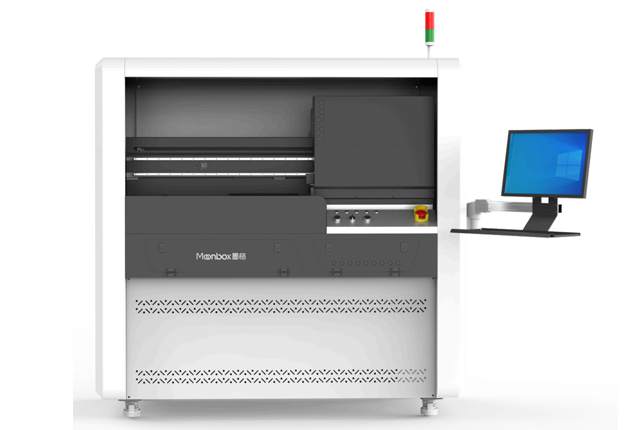
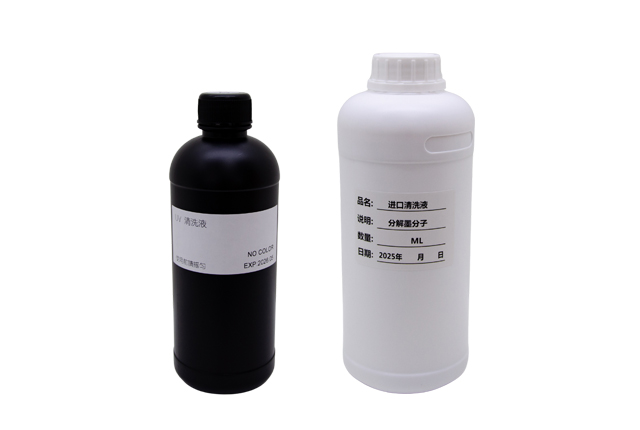
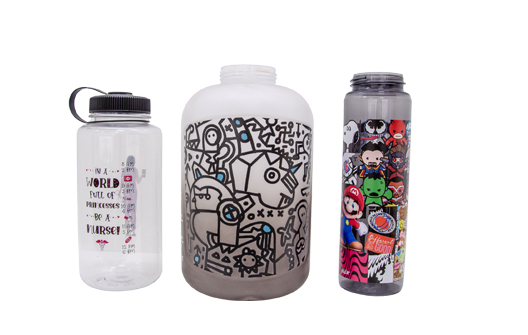
In 2026, drinkware brands compete on customization, short-run agility, and premium finishes that hold up to daily use. Seamless 360° UV decoration is becoming the standard method for high-impact drinkware printing — delivering full-wrap graphics, sharp detail, and fast turnaround without the setup complexity of traditional screen or pad printing. This guide explains how UV printing bottle workflows achieve no-seam results, what equipment features matter, and how to plan for production-quality durability.
| Driver | What It Means for Printing |
|---|---|
| Personalized and micro-batch drops | Short runs with variable artwork — no screen plate cost justified |
| Brand storytelling | Full-wrap narrative design uses the entire bottle surface |
| Event and promotional merchandise | Fast turnaround; unique designs per event or client |
| Premium retail positioning | Full-wrap graphics signal quality and justify higher price points |
A "seamless" 360° wrap means the start point and end point of the print join without a visible gap, overlap, or color shift. Achieving this requires:
Accurate rotary axis calibration so the bottle completes exactly one full rotation per print pass
Consistent color density from the first printed position to the last
Stable bottle registration so the artwork position does not shift between units
When any of these three controls slips, the seam becomes visible — a line where the wrap starts and ends that immediately communicates a production quality failure.
| Stage | What Happens | Key Control |
|---|---|---|
| Bottle fixturing | Bottle loaded onto chuck or rotary spindle | Secure grip without deforming bottle; repeatable center axis |
| Print head pass | CMYK + white ink heads lay ink as bottle rotates | Rotation speed synchronized with print head travel speed |
| UV curing | LED or mercury UV cures each layer instantly | Cure intensity matched to ink layer thickness |
| Varnish layer (optional) | Gloss, matte, or tactile varnish applied as final pass | Adds protection and premium finish effect |
Precision rotary alignment: the rotation axis must be perfectly concentric — any wobble in the bottle position creates banding or misregistration visible at the wrap seam
Chuck and fixture design: adjustable fixtures that grip bottles without slipping are critical — rotation slip is the most common cause of seam misalignment
White ink capability: essential for printing on dark, colored, or metallic bottles — white base layer establishes color accuracy before CMYK is applied
Multi-layer varnish: gloss spot UV effects, full-surface matte, or raised tactile finishes all require precise layer-by-layer registration
| Material | Printability | Key Requirement |
|---|---|---|
| Stainless steel (coated) | Excellent with correct prep | Clean surface; confirm coating compatibility |
| Aluminum | Good | Anodized surface typically needs no primer |
| Coated plastic (PP, PE) | Good | Surface treatment or primer may be required |
| Glass | Good | Clean surface; UV adhesion typically strong |
A drinkware print that fades, scratches, or peels after a few weeks of use generates returns, social complaints, and brand damage. The durability of a UV-printed bottle is determined by four variables: surface preparation, primer compatibility, ink system, and cure quality.
| Durability Factor | What Controls It | Risk If Ignored |
|---|---|---|
| Surface adhesion | Cleaning protocol; primer for difficult substrates | Ink lifts on tape test; peels at edges |
| Scratch resistance | Ink hardness after cure; varnish topcoat | Surface marks under normal handling |
| Water and condensation resistance | Full cure; ink formulation | Color softening; adhesion failure around condensation zones |
| Handling wear | Varnish layer; ink layer thickness | Wear at grip zones after 30–60 days of regular use |
| Test | Method | Pass Criteria |
|---|---|---|
| Tape adhesion | 3M 610 tape applied and pulled at 90° | No ink removal |
| Dry rub | 50 cycles at 500 g | No visible surface degradation |
| Soak test | Submerge for 30 minutes; air dry; tape test | No adhesion loss post-soak |
| Hot/cold cycling | 5 cycles between 60°C and 5°C | No cracking or delamination |
| Dishwasher simulation | 10 wash cycles at standard settings | Confirm claims before making them to customers |
Run these tests on the specific bottle model, ink system, and cure settings you will use in production. Do not assume results from a different substrate or machine transfer automatically.
| Configuration | Throughput | Best For |
|---|---|---|
| Single-station rotary | 1 bottle per print cycle | Prototypes; small custom orders |
| Multi-station (2–4 bottles) | 2–4x single-station throughput | Short to medium production runs |
| Inline conveyor with rotary | Highest throughput | High-volume production |
Bottle size changeover time is a significant throughput variable. If you regularly print multiple bottle diameters, invest in a fixture system designed for fast changeover rather than adapting universal fixtures — changeover time on a poorly designed fixture system can negate the speed advantage of multi-station printing.
| Defect | Cause | Prevention |
|---|---|---|
| Visible seam | Rotation slip; incorrect calibration | Check chuck grip before every run; calibrate rotation axis regularly |
| Banding | Print head gap; inconsistent rotation speed | Maintenance schedule on print heads; speed consistency validation |
| Adhesion failure | Oil or residue on bottle surface | Standard cleaning SOP before every batch |
| Under-cure | Lamp degradation; excess ink thickness | UV intensity monitoring; replace lamps at defined threshold |
| Misregistration across units | Inconsistent bottle diameter in the same SKU | Measure bottles from a new order before setting up — diameter variation between units in the same product line is common |
Create a cleaning protocol card posted at the printing station — consistent surface prep is the single most impactful defect prevention step
Build artwork templates for each bottle SKU that include safe zones, print start/end alignment marks, and bleed areas
Run a calibration print on the first bottle of every new batch before printing the full order
| Specification | What to Define | Notes |
|---|---|---|
| Bottle material | Stainless, aluminum, glass, plastic | Determines primer and surface prep requirements |
| Diameter range | Minimum and maximum bottle OD | Defines fixture compatibility |
| Height range | Minimum and maximum bottle height | Defines print area height |
| Print wrap | Full 360° or partial (specify degrees) | Affects rotation control requirements |
| Color requirements | CMYK only, or CMYK + white, + varnish | White ink capability is essential for dark substrates |
| Finish effects | Gloss, matte, spot UV, tactile | Confirm whether the system supports multi-layer varnish |
| Target throughput | Bottles per hour at production speed | Drives configuration recommendation |
| Resolution | 720 dpi, 1080 dpi, or higher | Match to your artwork complexity and customer expectation |
RIP software: confirm compatibility with your artwork workflow (Adobe, CorelDRAW, or other)
Template library: does the supplier provide bottle-specific templates for common sizes?
Training: on-site training for operators and maintenance staff included in purchase
Spare parts: confirm availability and lead time for print heads, UV lamps, and rotary components
Maintenance plan: define service intervals and what is covered under warranty versus chargeable
Seamless 360° UV decoration is the new production standard because it meets the real demands of 2026 drinkware: customization at any run length, premium full-wrap aesthetics, and fast turnaround. With the right process controls — consistent surface preparation, accurate rotation calibration, proper cure validation, and a structured durability testing plan — drinkware printing can scale reliably from first sample to production batch using UV printing bottle solutions.
Q1: What does seamless 360° mean for UV printing bottle decoration?
It means the full-wrap graphic circles the entire bottle with the start and end points joined so tightly that no seam, gap, or overlap is visible from any angle. Achieving this requires accurate rotary axis calibration, consistent rotation speed during printing, and stable bottle fixturing that eliminates grip slip.
Q2: Can UV printing adhere to stainless steel bottles?
Yes, on coated stainless steel with proper surface preparation. Clean the surface thoroughly to remove oils and residue, confirm the bottle coating is compatible with the UV ink system, and apply primer if recommended by the ink supplier. Run a tape adhesion test and a soak test on your specific bottle before approving for production.
Q3: Is 360° UV drinkware printing dishwasher safe?
Durability in dishwasher conditions depends on the ink system, varnish topcoat, cure quality, and the bottle surface coating. If you plan to market the print as dishwasher safe, validate with a minimum of 10 machine wash cycles at standard temperature settings and confirm adhesion, color, and surface integrity before making the claim to customers.
Q4: What are the most common defects in UV printing bottle production?
Visible seam from rotation slip or miscalibration, banding from print head gaps or inconsistent rotation speed, adhesion failure from insufficient surface cleaning, under-cure from degraded UV lamps, and misregistration across units from bottle-to-bottle diameter variation within the same product SKU.
Q5: What information do I need to request a 360° UV drinkware printing solution quote?
Bottle material and surface type, diameter and height range across all SKUs, desired print wrap coverage, color requirements including whether white ink and varnish are needed, target throughput in bottles per hour, resolution requirements, and any specific durability claims you need to support for your market.


 English