The global wine and spirits market relies heavily on visual storytelling. For centuries, a brand's identity was bound entirely to an adhesive paper label stuck to a glass surface. However, as premium wineries face shifting consumer expectations, escalating supply chain costs, and strict sustainability standards, traditional labeling methods are meeting their technical limits.
Today's beverage market demands high-impact tactile designs, immediate production agility, and true eco-friendly packaging. To achieve this, forward-thinking glass packaging companies and wineries are integrating a professional wine bottles UV printing machine into their production lines. This transition directly integrates high-definition artwork onto the glass substrate, entirely reshaping the presentation of premium beverages.
Traditional paper or pressure-sensitive vinyl labels come with persistent operational challenges that cut into vineyard profit margins and diminish shelf appeal.
First, standard paper labels are highly vulnerable to environmental factors. During long-distance shipping, cellar aging, or presentation in restaurant ice buckets, paper quickly absorbs moisture. This leads to bubbling, wrinkling, tearing, and mold growth, which immediately damages a premium brand's image at the point of consumption.
From a manufacturing perspective, physical labels create major supply chain bottlenecks. Wineries must order massive minimum quantities (MOQs) of printed labels months in advance. If a vintage blend changes, a regional regulatory warning updates, or a typographical error slips through, thousands of dollars worth of inventory must be scrapped.
Additionally, the adhesives required to bond labels to glass complicate recycling networks. The sticky residue left behind demands intensive chemical wash cycles at processing centers, increasing energy use and hindering eco-friendly goals.
Direct-to-glass digital decoration overcomes these physical limitations by using a highly controlled, contactless ink delivery method. The process replaces mechanical stamp plates and paper substrates with an advanced industrial UV cylindrical printer.
The production workflow follows a precise mechanical path:
Automated Pre-treatment: Glass is inherently non-porous and smooth, meaning raw ink lacks natural anchor points. The machine first applies an inline flame treatment or an ultra-thin chemical coating—such as a specialized primer—to alter the surface tension of the glass, creating an incredibly strong bond.
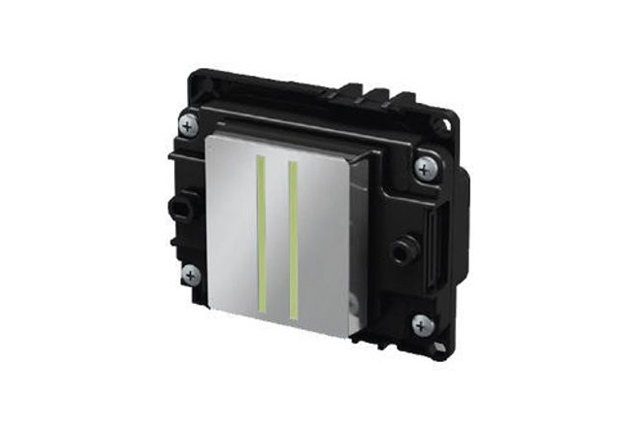
360-Degree Seamless Rotation: The wine bottle is secured into a synchronized rotary fixture. As the bottle rotates smoothly on its center axis, high-speed industrial printheads travel along the cylinder, deploying micro-droplets of UV-curable ink directly onto the curved surface.
Instant Photochemical Curing: Mounted directly alongside the printing carriage are powerful LED-UV lamps. The moment ink droplets land on the glass, they are exposed to concentrated ultraviolet light waves. This instantly triggers a cross-linking polymer chemical reaction, converting the liquid ink into a solid, resilient film layer in less than a second.
This immediate curing eliminates wet-ink waiting periods, preventing dust contamination and allowing completed bottles to move straight to filling and distribution.
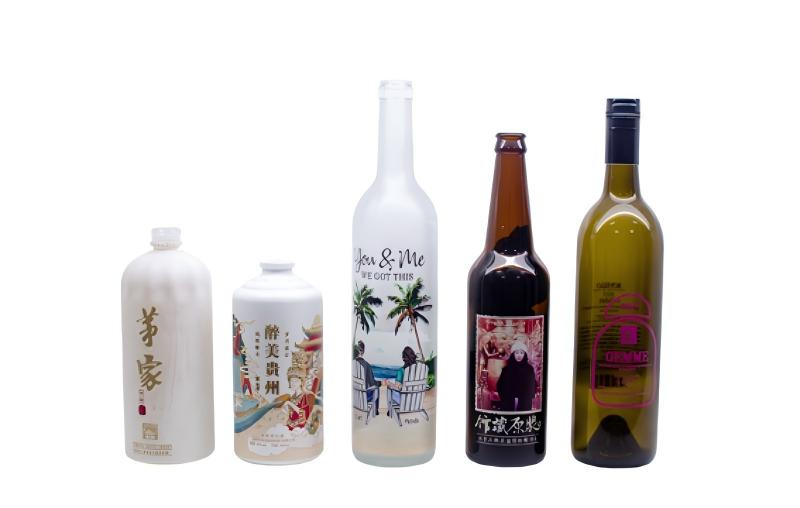
Transitioning to high-performance UV printing applications provides significant performance and financial benefits across the entire bottling line.
Complete Moisture and Scratch Resistance: Because the UV ink cures into a dense polymer matrix, the graphics are entirely water-resistant. The bottle can sit submerged in an ice bucket for days or endure rough shipping transit without losing its vibrant color or peeling away.
Eco-Friendly and Highly Recyclable: Direct UV printing eliminates paper waste, plastic backings, and sticky chemical adhesives. During glass recycling, the thin, cured polymer layer simply incinerates cleanly at standard furnace temperatures, without contaminating the recycled glass supply.
True No-Label Transparency: This approach allows for stunning "floating text" and transparent graphic layers. Wineries can showcase the natural hue and clarity of a Chardonnay or Rosé directly through the printed design, creating a minimalist aesthetic that is impossible to replicate with a paper border.
Exceptional Tactile Finish: By stacking multiple layers of white ink or high-build clear varnish, specialized machines print authentic 3D embossed emblems, raised braille characters, or faux-etched patterns right onto the glass, adding an appealing physical dimension to the bottle.
Digital direct-to-glass printing provides incredible creative freedom, turning every bottle into an unconstrained canvas for creative expression.
Wineries can easily produce ultra-limited seasonal editions or custom gift runs for corporate clients and weddings. Because the artwork relies on a digital file rather than physical screens, changing the design from one bottle to the next requires minimal setup time.
Brands can print rich, multi-layered historical illustrations, complex gradient backgrounds, and ultra-crisp regulatory text across the entire 360-degree surface of the glass, utilizing the bottle's shape to tell an immersive story.
Furthermore, this production capability extends far beyond the wine bottle itself. A commercial-grade UV cylindrical printer can seamlessly customize matching glassware, tasting room carafes, or metal cocktail shakers, allowing brands to deliver a highly cohesive experience across all consumer touchpoints.
In today's highly competitive market, standing out on retail shelves is essential. Premium wineries and artisanal spirits brands are moving away from legacy paper packaging because traditional labeling methods simply cannot support lean, on-demand supply chains.
Traditional decoration methods fail to balance cost, speed, and design freedom simultaneously. The operational data below compares these production workflows based on actual performance metrics:
| Operational Metric | Traditional Paper Labeling | Screen Printing (Ceramic Glass) | Direct-to-Glass UV Printing |
|---|---|---|---|
| Setup & Pre-press Time | 3 - 5 Days (Plate & Die Making) | 2 - 4 Days (Screen Mask Exposure) | 1 - 2 Minutes (Digital File Sync) |
| Minimum Order Quantity | 5,000 + units (To amortize setups) | 10,000 + units (High line-stop cost) | 1 Bottle (On-Demand Production) |
| Tactile 3D Print Height | 0 mm (Flat substrate limitation) | Max 0.1 mm (Thin ink layer) | Up to 2.0 mm (Stacked Varnish) |
| Production Post-Curing | Requires 12 - 24 hours bonding | Requires 500°C - 600°C Bake Ovens | Instant LED-UV Curing (< 1 Sec) |
| Moisture Performance | Fails in 2 hours (Ice bucket peeling) | Permanent (Scratch-resistant) | Permanent (5H Polymer Hardness) |
By integrating an industrial wine bottles UV printing machine, estate vineyards and high-volume manufacturers completely bypass legacy mechanical bottlenecks through three major advantages:
Zero-Inventory Agility: Because the entire workflow is driven by digital files, job switching requires minimal setup time—essentially reduced to a 1-2 minute file synchronization. Wineries can drop their MOQs down to a single bottle, making ultra-limited vintages and seasonal event bottles highly profitable.
Built-in Anti-Counterfeiting: Brands can utilize advanced UV printing applications to print unique, variable QR codes, localized serial numbers, and track-and-trace graphics directly onto the glass. This completely eliminates the risk of label tampering in secondary markets.
Premium Tactile Impact: The machine's ability to deposit high-build varnish layers creates embossed textures that mimic expensive acid-etching. This distinctive physical feel draws the consumer's hand directly to the product on a crowded retail shelf.
Ultimately, premium brands are adopting this digital shift because it successfully merges high-end artisanal presentation with the lean performance of modern smart manufacturing.
Direct-to-glass digital decoration is redefining premium beverage packaging. By moving past the physical limits of traditional paper labels, wine and spirits producers can easily create stunning, highly durable, and environmentally friendly packaging directly from digital design files.
As an industry leader in high-speed industrial cylindrical printing technology, Moonbox (MOGE) builds the advanced systems needed to scale your custom decoration business. Explore our latest innovations in Cylindrical UV Printers to view our full equipment lineup, or contact our engineering team today for a customized technical consultation.
Yes. Professional cylindrical printers utilize advanced multi-axis rotary systems and dynamic height-compensation algorithms. This configuration allows the printheads to maintain a consistent gap over gentle slopes, distinct shoulders, and tapered glass surfaces.
Absolutely. The instant LED photochemical curing creates a cross-linked polymer layer with up to 5H surface hardness. This durable finish is highly resistant to abrasions, impacts, and alcohol contact, ensuring the design remains flawless throughout shipping.
Traditional ceramic screen printing requires high-temperature ovens and expensive screen setups, making small production runs impractical. Direct UV printing uses an entirely digital workflow with minimal setup time, allowing for full-color gradients, variable data, and highly cost-effective small orders.
No, it actually improves it. Unlike traditional paper and vinyl labels that leave sticky, hard-to-clean adhesive residues on the glass, UV inks use an ultra-thin polymer formulation that burns off cleanly inside standard glass recycling furnaces without leaving toxic byproducts.


 English