For B2B buyers, the most damaging customer complaint in drinkware printing is not a color mismatch or a registration error — it is artwork that looks perfect at delivery and then peels, flakes, or scratches off after a handful of uses. On metal insulated tumblers and glass cups that go through repeated dishwasher cycles, this failure mode is both common and commercially costly: returns, replacement orders, and reputational damage that affects repeat business.
The root cause is almost never the printer itself. It is a process gap — primer strategy, UV ink chemistry, and curing intensity that are not working as a coordinated system. Choosing the right drinkware UV printing machine setup means engineering all three factors together, not optimizing them in isolation. This article explains the failure mechanisms, the three non-negotiable process controls, and the selection and maintenance framework that delivers industrial-grade wash resistance at scale.
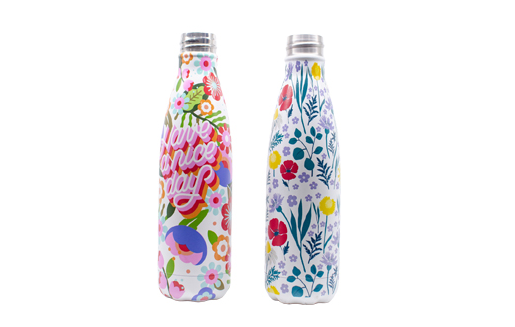
Metal tumblers and glass cups share a characteristic that makes them difficult substrates for UV printing: smooth, low-porosity surfaces with limited mechanical anchoring sites. On porous materials like wood or uncoated paper, ink physically penetrates the surface and locks in place. On polished stainless steel or borosilicate glass, the ink sits on top of the surface — and the bond is entirely dependent on chemical adhesion between the ink layer and the substrate.
Dishwasher cycles attack that bond from multiple directions simultaneously: thermal cycling between hot wash and cool rinse expands and contracts the substrate and ink layer at different rates, creating stress at the interface. Alkaline detergents chemically attack weakly bonded ink layers. Mechanical abrasion from water jets and contact with other items accelerates edge lift where the ink boundary is exposed. A print that survives one or two cycles but fails at ten or twenty has a bonding system that was never adequate for the application.
Reliable dishwasher durability requires both physical anchoring and chemical bonding working together:
Chemical bonding is established through compatible primer and ink chemistry — the primer modifies the substrate's surface energy to allow the ink to wet and bond at the molecular level
Physical anchoring is improved through surface preparation that increases the contact area between ink and substrate
Correct UV cure completes the crosslinking reaction — under-cure leaves the polymer network incomplete and adhesion weak; over-cure drives brittleness that causes cracking and edge chipping under thermal stress
Explore UV Moon's drinkware printing solution
Primer is the most commonly skipped step in drinkware printing workflows — and the most common reason prints fail the dishwasher test. On glass and coated metal surfaces, primer serves two functions: it improves the surface energy of the substrate so the UV ink wets evenly rather than beading, and it creates a chemical bridge between the substrate and the ink layer that survives thermal and chemical stress.
| Primer Control Variable | Correct Practice | Failure Mode if Wrong |
|---|---|---|
| Primer type | Matched to substrate and coating type | Poor adhesion even with correct ink and cure |
| Film thickness | Uniform, thin coat — not pooled or streaked | Thick spots cause adhesion failure; thin spots leave gaps |
| Flash-off time | Full solvent evaporation before printing | Solvent trapped under ink layer causes bubbling and delamination |
| Contamination control | Clean application environment, no oil or dust | Contamination prevents primer-to-substrate bonding |
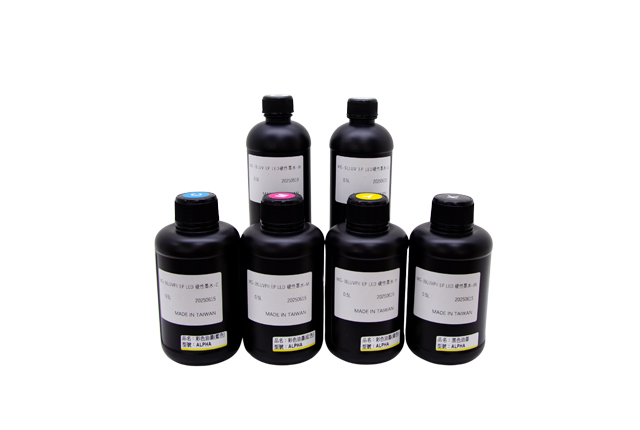
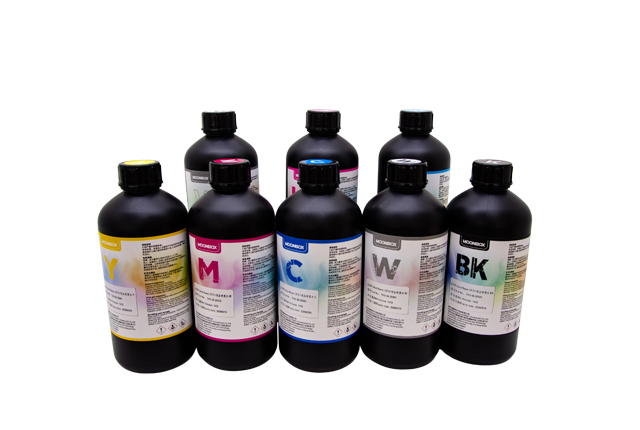
UV inks formulated for general flatbed printing are not necessarily optimized for glass and metal adhesion or chemical resistance to dishwasher detergents. For drinkware applications, the ink specification must include:
Confirmed adhesion performance on glass and coated metal substrates
Chemical resistance to alkaline detergents at dishwasher temperatures
Scratch resistance after full cure that meets the application's handling requirements
Batch-to-batch consistency for color and adhesion — critical for industrial delivery where every order must match the approved sample
Curing is where the chemistry becomes permanent. The UV energy delivered to the ink layer must be sufficient to complete the crosslinking reaction across the full ink depth — including the bottom layer where adhesion to the primer and substrate occurs.
The correct curing window is narrower than most operators assume:
Under-cure: incomplete crosslinking leaves the ink layer soft, with weak adhesion and poor chemical resistance — the print may look acceptable but fails quickly under washing
Correct cure: full crosslinking delivers maximum adhesion, scratch resistance, and chemical resistance
Over-cure: excessive crosslink density makes the ink layer brittle — it passes initial scratch tests but cracks under the thermal cycling of dishwasher use
Validate cure with test strips and standardized wash and scratch testing before committing to production parameters. Visual inspection alone is not sufficient.
The machine selection decision for drinkware production involves more than print resolution and speed. The following checklist covers the factors that determine whether the system can deliver consistent adhesion across a full production shift:
| Selection Factor | What to Confirm | Why It Matters |
|---|---|---|
| Rotary fixture or jig system | Stable rotation with minimal runout; compatible with your diameter range | Banding and misregistration from unstable rotation create edge defects that accelerate wash failure |
| Ink set configuration | CMYK + White + Varnish availability | White is required for dark metal substrates; varnish adds surface protection |
| Primer workflow compatibility | In-line or pre-process primer station; contamination prevention | Primer application method affects consistency across high-volume runs |
| UV lamp or LED curing spec | Adjustable power for different coatings; consistent output over shift length | Lamp aging reduces curing energy — output must be monitored and maintained |
| Nozzle health monitoring | Automated or semi-automated nozzle check and recovery | Nozzle dropout creates ink starvation that weakens adhesion in affected areas |
| Multi-SKU calibration | Fast changeover between different cup and bottle diameters | Production efficiency on mixed drinkware orders |
For drinkware-specific configuration guidance and substrate compatibility details, review the dedicated resource: UV Printing Solutions for Cups and Drinkware
Promotional drinkware is the application where adhesion failure creates the most reputational damage. A corporate client who distributes branded tumblers at an event and receives complaints that the logo peeled after two weeks will not reorder — and will share the experience. The "dishwasher-safe" claim on promotional drinkware must be backed by a validated process, not assumed.
Higher customer scrutiny and premium pricing make returns expensive in both cost and brand terms. Limited edition drinkware buyers expect print quality that matches the product's positioning — and they notice adhesion failures faster than general consumers.
Hospitality drinkware goes through commercial dishwasher cycles that are more aggressive than domestic machines — higher temperatures, stronger detergents, and higher cycle frequency. The durability standard for hospitality supply is significantly higher than for promotional gifting, and the acceptance testing should reflect that.
Before production begins, define the pass/fail criteria that the finished product must meet:
Dishwasher cycle count target (buyer-specified — typically 50 to 200 cycles for commercial applications)
Wet rub and dry rub resistance grade
Scratch resistance under defined load
Adhesion cross-hatch result on flat test coupons from the same ink/primer/cure system
The total cost of ownership for a drinkware printing operation includes every cost that adhesion failure generates downstream: reject and rework labor, replacement material cost, return shipping, customer service time, and the harder-to-quantify cost of lost repeat business. A process that produces a 5% reject rate on a high-volume drinkware order generates costs that dwarf the difference between a well-specified and a budget ink or primer system.
| TCO Component | Cost Driver | Control Lever |
|---|---|---|
| Reject rate | Adhesion failure, curing inconsistency | Validated primer + ink + cure system |
| Rework labor | Failed prints requiring stripping and reprinting | Process consistency reduces rework frequency |
| Return and replacement cost | Customer complaints after delivery | Dishwasher cycle testing before shipment |
| Lamp or LED replacement | Aging reduces curing energy output | Scheduled output checks and replacement at defined hours |
| Ink and primer waste | Contamination, expired stock, changeover purges | Standardized SKU set and inventory rotation |
Keep the primer application station clean and free from dust and oil contamination — contamination at the primer stage defeats the entire adhesion system
Monitor UV lamp or LED output at defined intervals and replace before output drops below the minimum curing threshold
Run nozzle health checks at the start of each shift and after any extended idle period
Standardize ink and primer systems across metal and glass SKUs to reduce changeover frequency and contamination risk
Dishwasher durability is not a single feature — it is the result of a controlled process. For metal tumblers and glass cups, reliable drinkware printing depends on three linked factors working together: correct primer strategy that establishes chemical bonding at the substrate interface, consistent UV ink performance with confirmed chemical and scratch resistance, and curing intensity tuned to complete crosslinking without driving brittleness. When physical anchoring and chemical bonding are both engineered into the workflow and validated with standardized testing, prints resist scratching and repeated washing — reducing returns and protecting brand reputation in B2B delivery.
Explore UV Moon's drinkware printing solution and submit your production details for a machine, ink, and primer recommendation:
UV Drinkware Printing Solution — View Configuration and Request a Quote
To receive a recommendation matched to your substrates and durability targets, provide the following:
Work conditions: Substrate types (stainless steel, coated metal, borosilicate glass, soda-lime glass), surface condition, target dishwasher cycle count, and production shift length.
Quantity: Daily output target, SKU count, and whether this is a trial order or full production line capacity.
Size and spec: Cup or bottle diameter range, height range, print area dimensions, and single-pass or multi-pass preference.
Target metrics: Required adhesion grade, scratch resistance level, wash resistance target in cycle count, and color and white opacity requirements.
Current problem: Peeling after washing, edge lift, poor adhesion on glass or coated metal, scratching, inconsistent curing results, or high reject rate on current production.
1. What is drinkware printing?
Drinkware printing is the application of logos, graphics, or decorative artwork to cups, tumblers, mugs, and bottles using processes such as UV printing, screen printing, pad printing, sublimation, or laser marking. Each process has a different durability profile, color capability, and cost structure. UV printing is particularly suited to full-color, variable, and small-to-medium batch production on a wide range of substrate materials, including metal and glass, when the correct primer and curing system is used.
2. How does UV printing compare with screen printing, pad printing, or laser marking on drinkware?
UV printing offers full-color capability, design flexibility for variable and short-run orders, and good durability when the primer and curing system is correctly configured. Screen and pad printing are cost-effective for high-volume single-design orders but require separate screens or pads per color and design. Laser marking offers excellent permanence and requires no consumables, but is limited to single-tone results and is not suitable for full-color artwork. The right process depends on the substrate, the required durability standard, the design complexity, and the production volume.
3. What is the ROI of upgrading to an industrial drinkware UV printing machine setup?
ROI comes from multiple sources: fewer rejects and returns reduce material and labor waste; validated dishwasher durability allows the operation to sell higher-value "dishwasher-safe" print packages at a premium; faster multi-SKU setup reduces changeover time on mixed drinkware orders; and consistent adhesion reduces the customer service and replacement cost that adhesion failures generate. For operations currently experiencing significant reject rates or customer returns, the payback on a correctly specified system is typically rapid.
4. Do we need to change our current workflow to improve dishwasher durability?
In most cases, yes — but the changes are process upgrades rather than a complete rebuild. The most common improvements are adding or optimizing the primer application step, tuning UV curing power and conveyor speed to the correct energy window for the substrate and ink system, and standardizing the ink set for the specific substrate coatings in the production mix. These process changes can often be implemented on existing equipment before a machine upgrade is considered.
5. What parameters should we provide for correct machine and consumable selection?
Provide the following: substrate material and coating type (stainless steel, coated metal, borosilicate glass, soda-lime glass), cup or bottle diameter and height range, target dishwasher cycle durability, artwork requirements including CMYK, white, and varnish needs, daily production volume and SKU count, existing curing system type and ink constraints, and current failure mode — whether peeling, cracking, scratching, or curing inconsistency. This information allows the supplier to recommend the correct machine configuration, ink system, and primer strategy for your specific application.


 English